In 2018, Anthony Bourdain sat in a Swedish cabin not far from here and said something I have never forgotten: "Good food is available to anyone with money. But only certain people know how to sit still and taste it."
That cabin, two kilometres from where we are now, has been owned by my wife Therese's family since 1636. We raised our three kids there. Used it as a place to think when the world got loud. When Therese finally said, "This place is too good to keep to ourselves," I understood what she meant wasn't just the cabin. It was the silence. The permission to stop.
So we built this one. I'm Cole. I moved here from British Columbia in 2013 when Therese and I started building a life on this coast. I'm a photographer by trade, and I run Way Up North, a community for wedding photographers. But this cabin is my other job. We asked Danish architect Mette Fredskild to design it the way she designs everything: by listening to what the place already is, then protecting it.
The Design
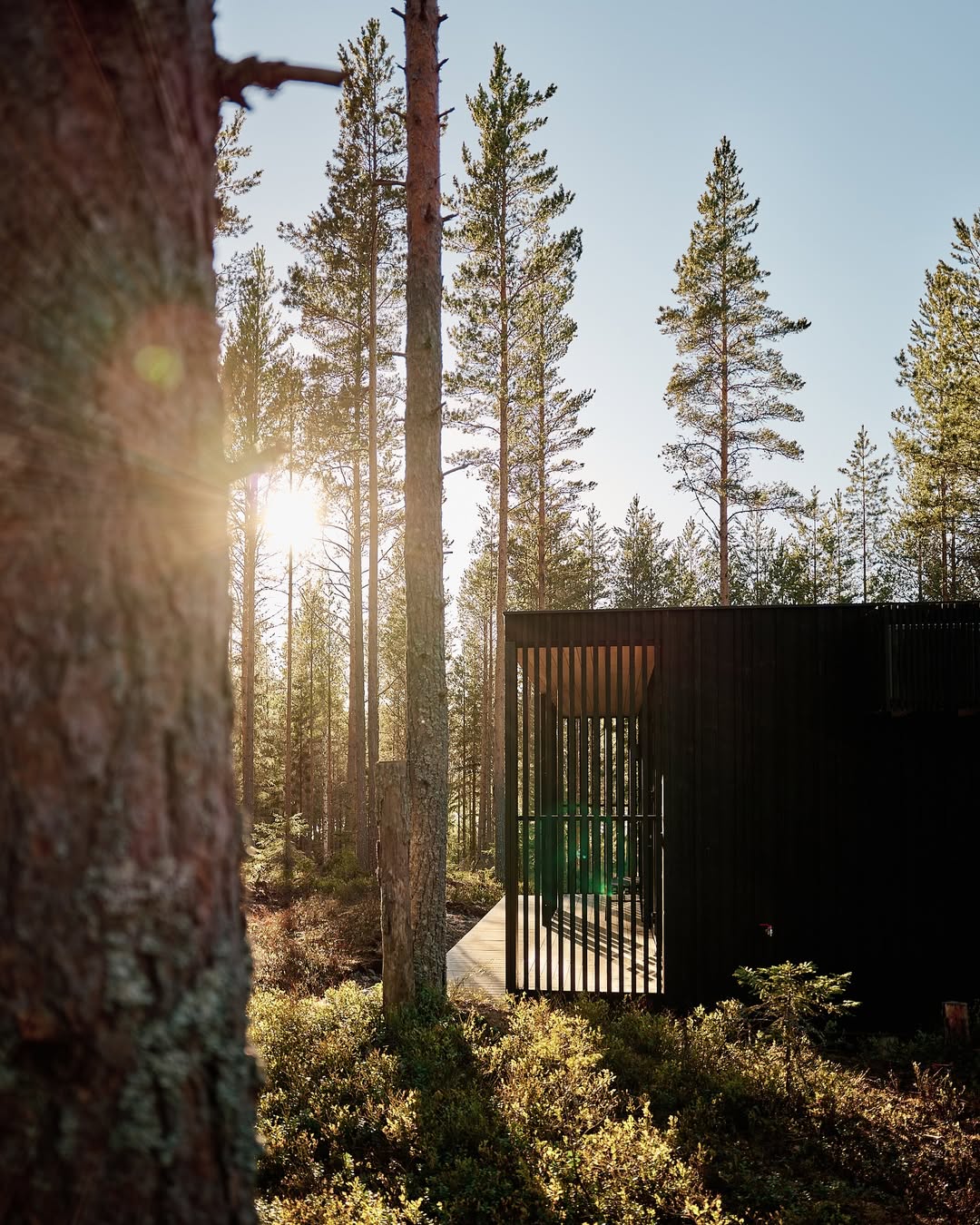
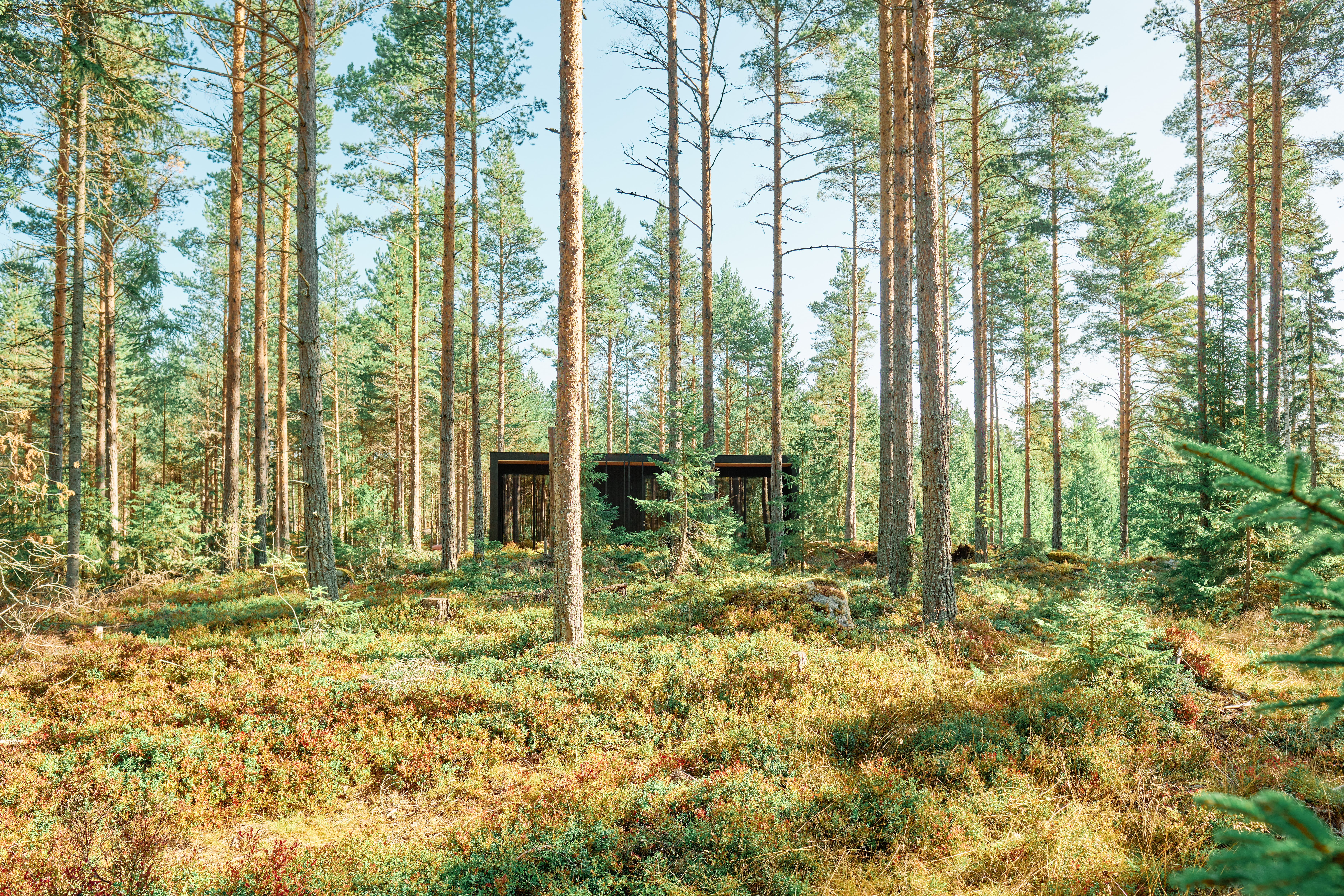
Designed by Danish architect Mette Fredskild, this cabin is 32 square metres of charred timber and triple-glazed glass. The black exterior is shou sugi ban, the Japanese technique of burning wood until what remains is permanent. It absorbs into the trees. Step back ten metres and it is gone.
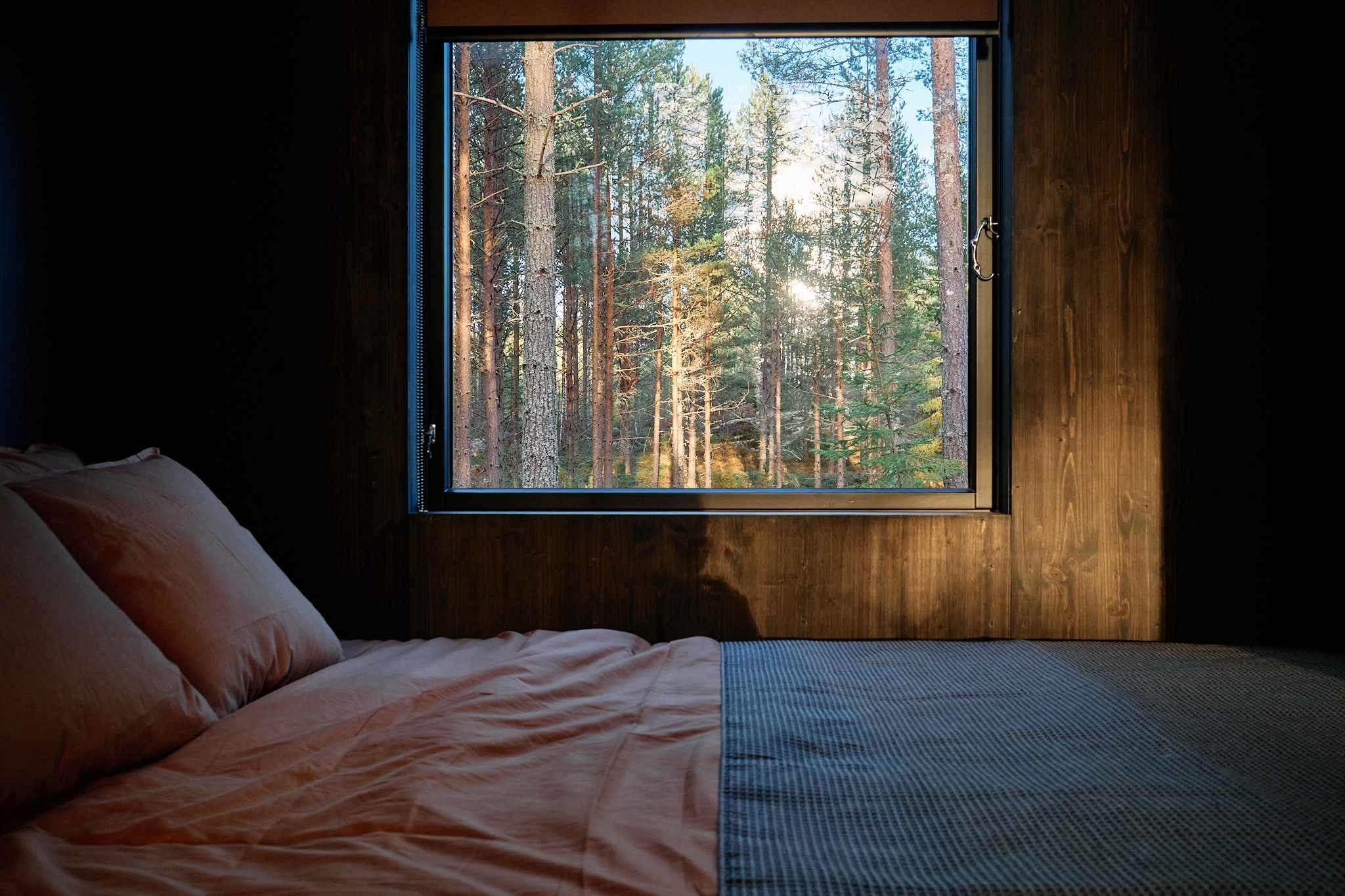
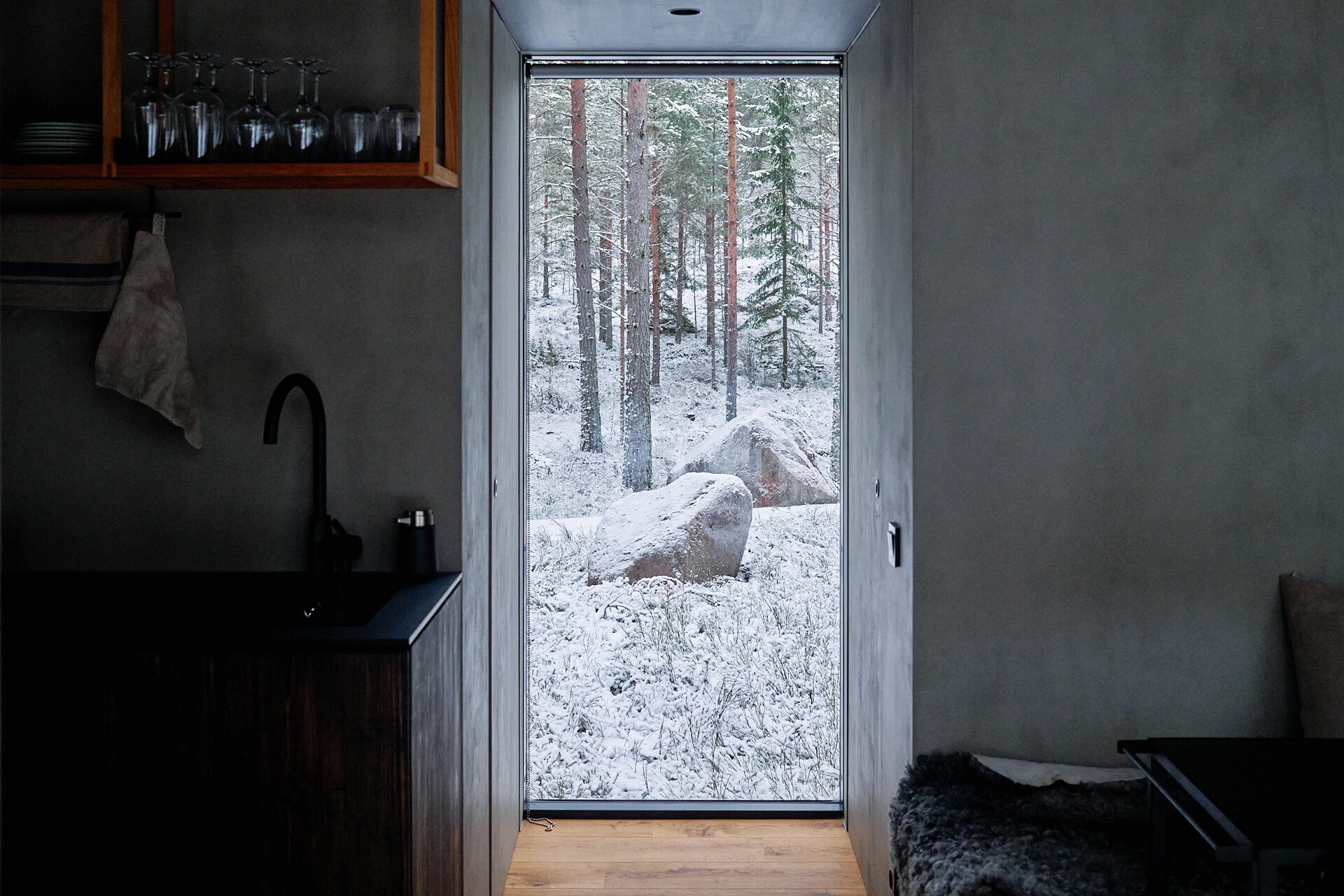
Inside: two sleeping spaces with a sliding door between them. Heated concrete floors. A small electric stovetop, kettle, toaster, coffee maker. Everything you need. Triple-glazed windows that frame the view without asking you to perform anything back at it. No mirrors. No surfaces. Just glass and what is beyond.
The Forest and The Path
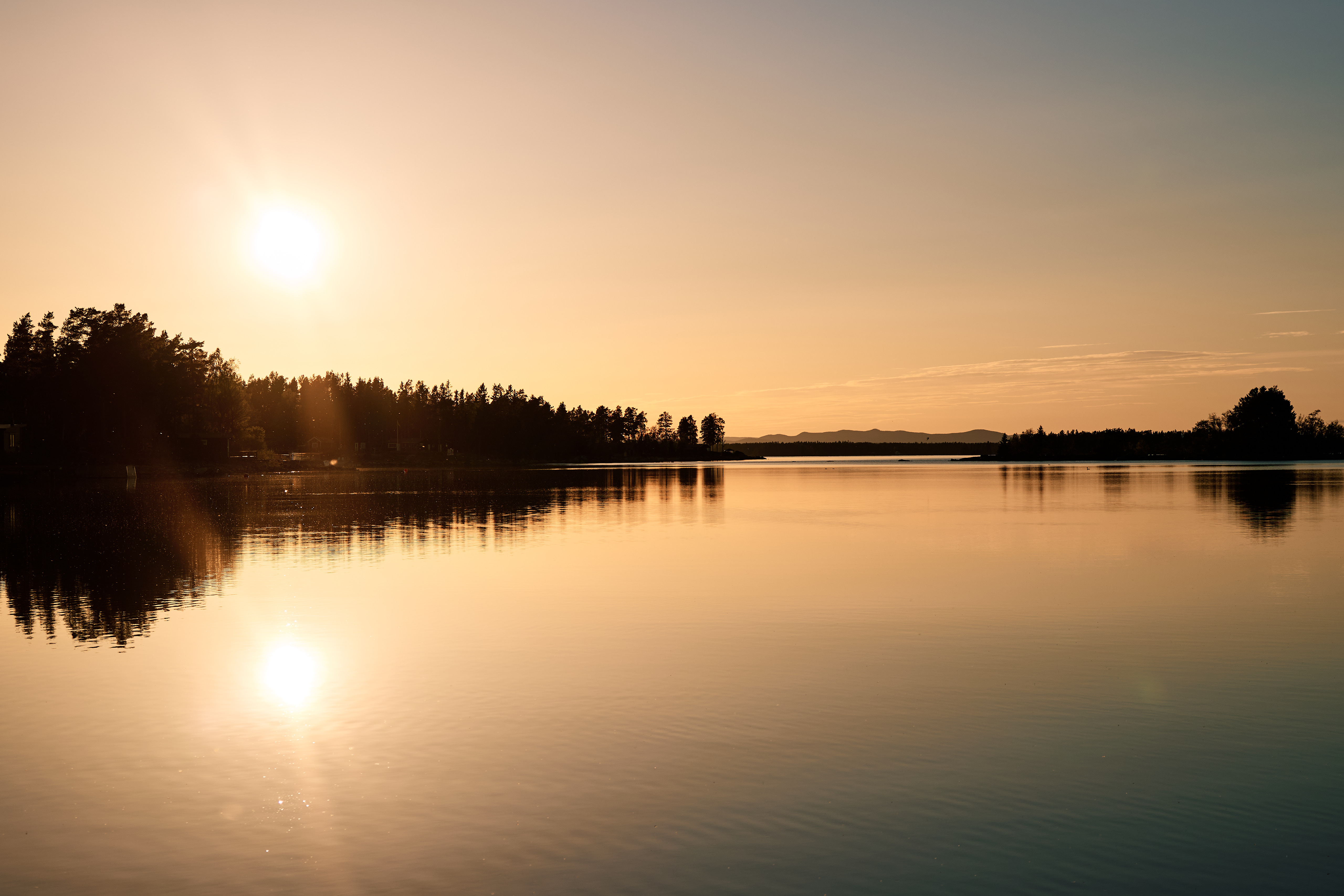
You walk 200 metres through the forest to reach the Baltic. Four minutes on a boardwalk that the land tolerates more than welcomes. The dock is where the phone usually stops working. Where the sound changes from forest to water. Where most guests leave their devices behind without needing to.
Söderhamn is fifteen minutes south by car if you need things that forests do not provide. ICA supermarket. A proper high street. Restaurants. Everything you came here to stop thinking about. It is the paradox. You are never far from normal. But normal has never felt further away.
The trees around this place are Scotch pine and spruce, close and dark. In summer the undergrowth is fern and moss. In autumn, mushrooms. In winter, snow that speaks louder than any human voice.
There is a phone box on the wooden table. Not because we are romantic about disconnection. Not because we judge. Your phone is welcome here. Your 5G signal works if you need it. Nobody has needed it yet. But something happens when you choose the box. By evening you stop looking for your device. By day two you have forgotten it exists. By the final morning, you realise how much silence was here the whole time. You just had not learned to listen for it.
The cabin teaches you that boredom is not a failure of entertainment. It is the beginning of thinking.
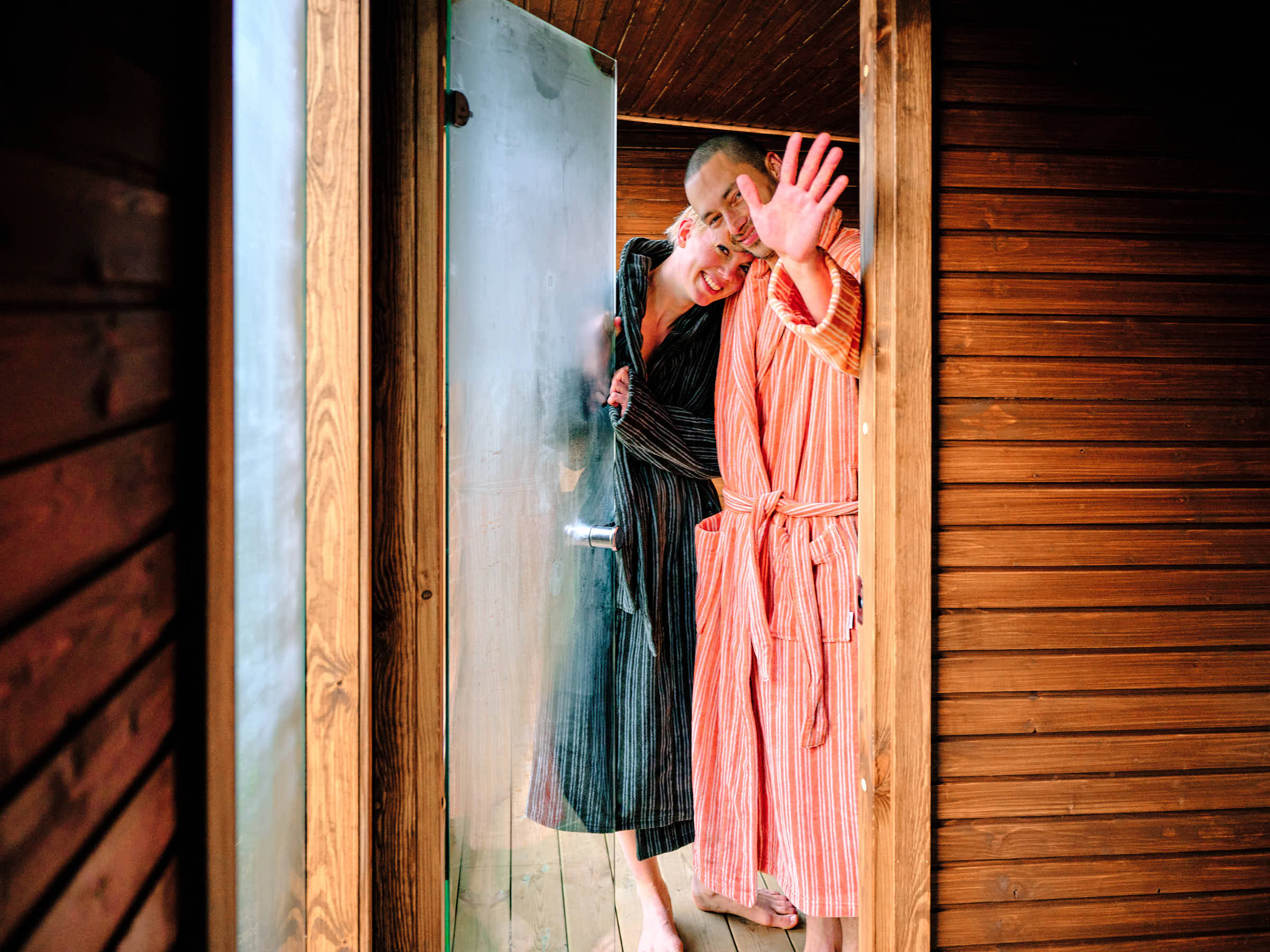
The sauna is thirty metres away. Electric. Thirty minutes to heat. You sit in it until your skin remembers that it is alive. Then you walk to the dock and swim into the Baltic. This is how you become water again.
What Changes With The Light
Summer brings permanent daylight. Read outside at 11pm. Swim after dinner. The water is cold but swimmable. Everything is warm except the cabin at midnight.
Autumn is when the storms come and the light turns gold then orange. The forest becomes intimate through the windows. The cabin holds steady. This is the season that teaches you about weather.
Winter brings snow and darkness and the possibility of northern lights. The heating works properly now. The sauna becomes necessary. The Baltic freezes in the coldest years. This is when you learn about cold.
Spring returns the light. The air becomes warm enough to stand it. Wildflowers appear. The cabin stops feeling isolated and starts feeling like a secret the forest is letting you keep.
Getting Here
Humlegårdsstrand is the address though it appears on no tourist maps because tourists do not come here. Postcode 826 93. Söderhamn. Hälsingland. GPS 61.2769444, 17.1138889 if your phone needs precision.
By Car
Stockholm Arlanda to here is two hours and twenty minutes north on the E4. Straight line. You stop seeing suburbs at Västerås. Stop seeing other cars after Gävle. By the time you reach the coast, you have already left the world behind.
By Train
SJ trains from Arlanda to Söderhamn take two to two and a half hours. Better than driving. You can read. You can sleep. You can watch the landscape change without focusing on the road. When you arrive, someone drives you the final fifteen minutes. When you leave, someone picks you up. No rental car required.
What To Pack
Bring clothes for the season. Walking shoes. A good book. Do not bring expectations. Do not bring a phone charger unless you plan to use your phone. Bring coffee beans if you have a brand you love. The cabin has a coffee maker but not your coffee.
Bring warm water in a thermos if you cannot function without tea. Bring a jumper. Bring socks. The heated floors are warm but not warm. Bring ingredients for meals made on a stovetop. Bring the person you want to spend time with. Everything else is optional.
The Questions People Ask
Is the cabin that small?
Yes. 32 square metres means you are never more than three metres from another person or a wall. This is intentional. The design forces you to share space, to be present instead of scattered. It works because everything here serves one purpose: making you feel held when you want to be, and giving you the forest when you want to be alone. If you need solitude, close the door.
What if we need to cook something complicated?
You cannot. There is no oven. There is a stovetop, kettle, and toaster. You can boil, fry, or grill. You can make pasta, steak, fish, vegetables, eggs. You can make an entire meal on a stovetop. What you cannot make is bread or cakes or anything that requires precise oven temperature. Treat it as a redirect. You came here to cook simply. To taste what food tastes like when you are not standing in front of a screen.
What if we have no mobile signal and something breaks?
The cabin runs on-grid. It is reliable. In fifteen years at the family cabin two kilometres away, there has been one power cut lasting three hours during a storm. The cabin is built to keep you safe, warm, and fed. If you need emergency help, 5G works at the property and you can call. If you need an engineer, you can call. Nothing is hidden. The decision to have no Wi-Fi is a choice, not a consequence of being remote.
How many nights minimum?
Two nights. The cabin needs time to work on you. One night is arrival. Two nights is when you stop thinking about the drive home. The first morning you are still in travel mode. The second morning you are somewhere else entirely.
Can we bring kids?
Kids thrive here. My own three grew up between our family cabin and this forest. Kids do not need Wi-Fi. They need water, trees, and space to be loud. The sauna becomes an adventure. The walk to the dock becomes a quest. The lack of screens becomes irrelevant when there is a forest to explore. Kids benefit especially from a digital detox because they have fewer years of habit to undo. The cabin is 32m² though. If you are bringing three kids and needing to work, you will want to reconsider.
What about wheelchair access?
A ramp is available. There is a 10cm ledge at the entrance. Parking is a one-minute walk up a small hill. The interior is 32 square metres so mobility is limited. If accessibility is essential, contact us directly. We can discuss specifics and whether the cabin is right for your needs.
What is your cancellation policy?
28 days or more before arrival: full refund. 14 to 28 days: change the date or receive a credit for a future stay. Less than 14 days: no changes. We understand that life happens. We also understand that the cabin has a limited calendar and each stay is precious.
Is there a pet policy?
We love dogs. We have three kids who grew up with dogs. Right now we are keeping the cabin pet-free. This might change. This might not. If you need to bring your dog, email us. We can discuss.
You already know if this is for you. Everything else is just noise.
Book Your Stay
About the Author
Cole Roberts is a photographer and founder of Hop Farm Beach, a private cabin retreat on the Swedish Baltic coast. He photographs elopements and intimate ceremonies across Scandinavia through his studio, Nordica Photography.